
London homes have personality. Some sit behind crisp white stucco in Kensington. Others hide industrial beams in Shoreditch lofts. Then there are Victorian terraces in Clapham, Edwardian semis in Muswell Hill, and sleek riverside apartments overlooking the Thames. Different eras. Different styles. But here’s something they increasingly share: Stone Effect Tiles.
If you’ve walked into a newly renovated London kitchen or bathroom lately and thought, “Wow, that looks like real stone,” chances are you were looking at stone-effect porcelain. And not just any finish, but beautifully blended stone variations that mimic nature without the headaches of maintaining actual stone.
Let’s unpack why these tiles are taking over London interiors and how to choose the right ones for your home.
Why Londoners Are Falling in Love with Stone Effect Tiles
Natural stone is stunning. No debate there. Marble, slate, and limestone carry texture, depth, and history. But real stone can be expensive, porous, and high-maintenance. London life is busy enough. Who wants to reseal flooring every year?
That’s where Stone Effect Tiles come in.
They are designed to mimic the fine colour effect, veining and natural flaws of natural stone. Instead of a flat, uniform finish, you get variation, lighter patches, deeper streaks, and delicate movement. It feels alive. And because they’re usually made from porcelain, they’re tough. Resistant to moisture. Easy to clean. Perfect for everything from high-traffic hallways to compact en-suite bathrooms. In a city where square footage is precious, finishes have to work hard. These tiles do exactly that.
What Exactly Are Stone Effect Tiles?
Let’s keep it simple. “Stone effect” refers to the variation in colour and shading across tiles in the same range. Real stone isn’t one flat shade. Manufacturers recreate that variation using advanced digital printing technology. The result? Tiles that look naturally weathered, layered, and textured, without being identical clones of each other. Think of it like this: if flat-colour tiles are a painted wall, stone-effect tiles are a watercolour painting. Depth. Character. Soft transitions. You’ll often see stone variation graded from V1 (very uniform) to V4 (high variation). London designers tend to lean towards moderate to high variation. It creates visual interest without overwhelming smaller spaces.
Why They Work So Well in London Properties
London homes aren’t always generous with light. Period properties can have narrow hallways. Basement conversions are common. Open-plan living spaces often double as entertaining areas. The stone effect finishes help in ways you might not expect.
-
They Add Depth to Small Spaces
Subtle shading tricks the eye. It adds movement. That movement makes rooms feel less flat and more expansive.
-
They Hide Everyday Wear
Let’s be honest. London’s weather isn’t exactly dry. Wet shoes, umbrellas, the occasional muddy paw print, life happens. Variation in stone disguises minor dirt and scuffs far better than uniform tiles.
-
They Complement Both Old and New
Victorian fireplace? Exposed brick wall? Ultra-modern kitchen island? Stone Effect Tiles sit comfortably in both worlds. They bridge heritage and contemporary design without clashing.
Trendy Stone Effect Styles in London Houses
Stone-effect tiles are being used to create some of the most fashionable interiors in London, with timeless marble-inspired finishes, cosy limestone tones and dramatic slate appearances. Each of the styles will offer its own mood, as well as classic elegance, cosy minimalism, or modern industrial flair.
The tranquillity is in the detail and variation of light and shade that makes each space look natural and multi-faceted.
-
Marble-Look Tiles
Marble never goes out of fashion. It whispers luxury. In London flats where real marble might stretch the budget (or the structural load), marble-effect porcelain offers the same elegance without the drama. White with soft grey veining remains a favourite. It brightens smaller bathrooms and reflects light beautifully. Darker marble effects, think charcoal with bold white streaks, are appearing in statement cloakrooms and kitchen splashbacks.
-
Limestone & Travertine-Look Tiles
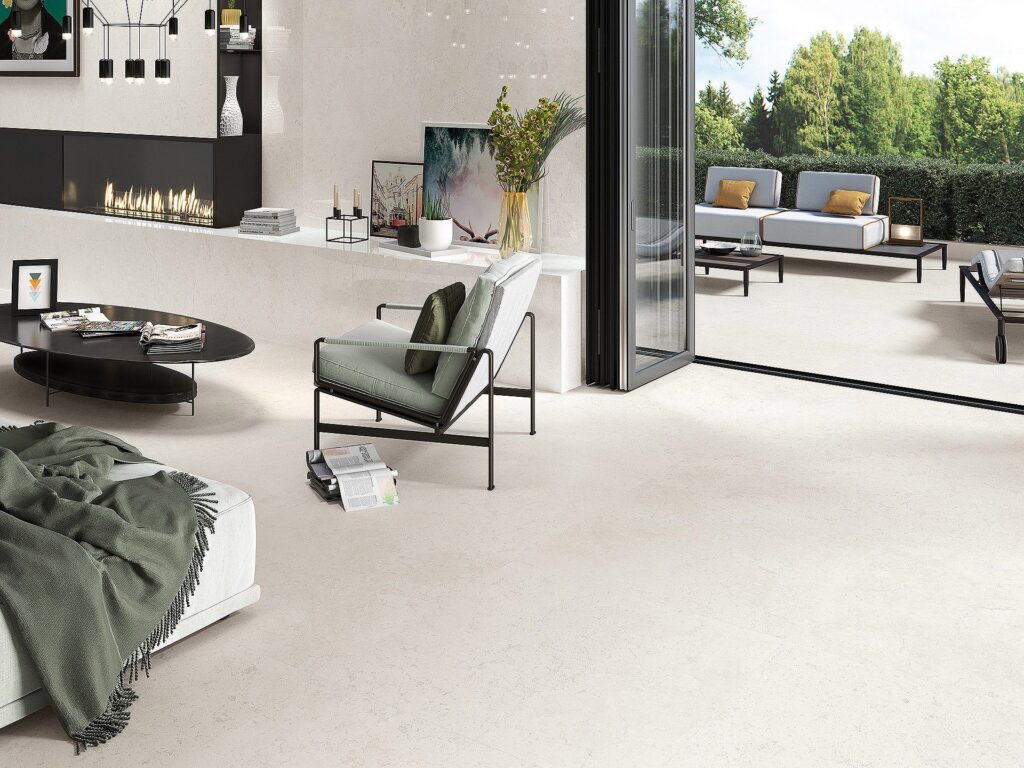
These bring warmth. Soft beige, sandy tones, gentle movement. Perfect for open-plan living spaces where you prefer calm over contrast. They’re popular in southwest London family homes, where neutral palettes dominate. Pair them with wood cabinetry and brushed brass fixtures, and you’ve got effortless sophistication.
-
Slate & Concrete-Inspired Finishes
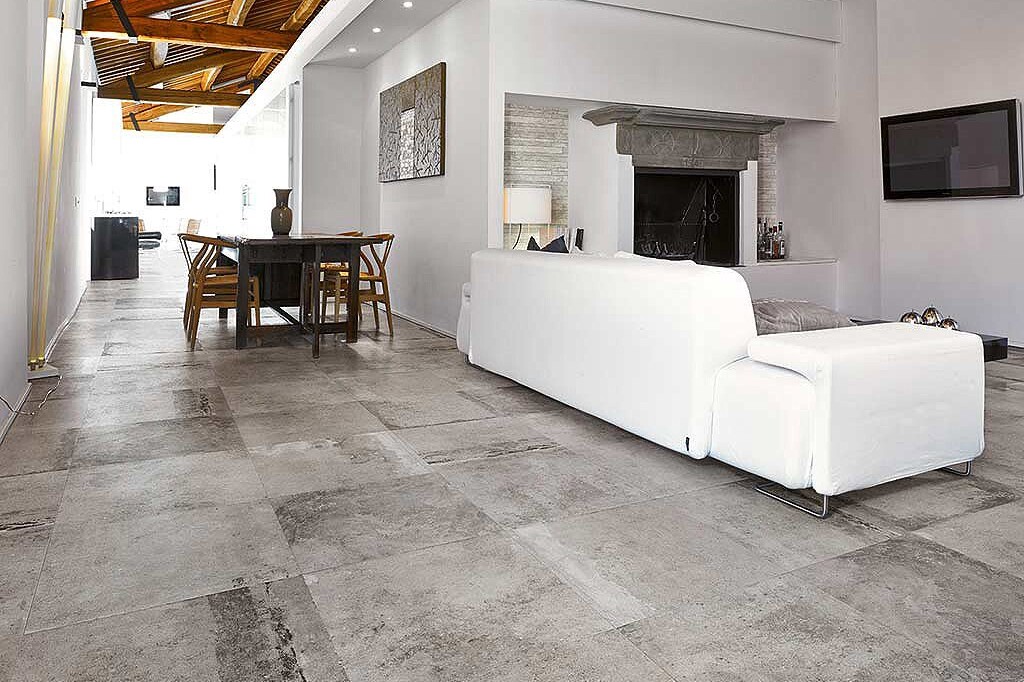
For industrial-style flats in converted warehouses or riverside apartments, darker slate tones and concrete looks hit the mark. They add mood. Texture. Edge. And here’s the clever part: unlike real slate, porcelain versions don’t flake or require sealing. They keep their sharp appearance with minimal effort.
Where to Use Stone Effect Tiles in Your Home
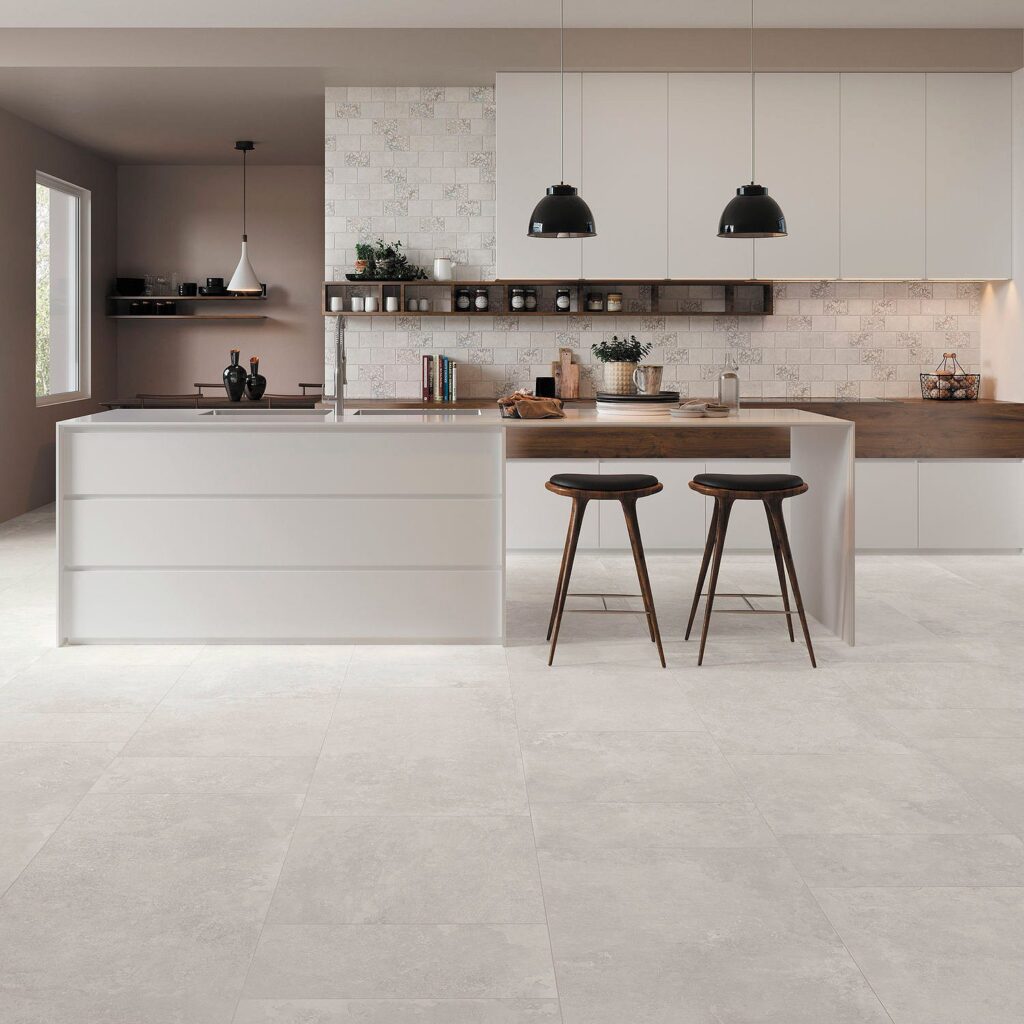
You don’t have to limit them to bathrooms. In fact, many London homeowners don’t.
-
Kitchens
Stone-effect flooring grounds the space. It balances glossy cabinets and modern appliances. Large-format tiles reduce grout lines, creating a seamless flow, which is especially helpful in open-plan layouts.
-
Bathrooms
Walls, floors, even shower enclosures. Using the same tile across surfaces makes compact bathrooms feel larger. It creates continuity.
-
Hallways
Hallways take a beating. Shoes, deliveries, constant foot traffic. Porcelain stone effect tiles handle the pressure while keeping the entrance stylish.
-
Living Areas
Underfloor heating? No problem. Porcelain conducts heat efficiently, making it a smart choice for cosy winter evenings.
Choosing the Right Stone Effect Tiles for Your London Home
Now the fun part. Selection. But before you fall in love with a sample tile under bright showroom lights, think about your own space.
-
Consider Natural Light
North-facing rooms in London can feel cooler. Warmer stone tones, beige, cream, and soft taupe help counteract that chill. South-facing areas do not feel chilled because they are able to cope with cooler greys and contrasts.
-
Think About Tile Size
Large-format tiles (like 600×600 mm or even 1200×600 mm) are trending. They reduce grout lines and feel contemporary. Smaller rooms can still handle large tiles; it’s a myth that they don’t.
-
Pay Attention to Variation Level
High variation creates drama. Low variation feels calm and uniform. If you’re tiling an entire ground floor, moderate variation often works best to avoid visual chaos. And always, always view multiple tiles together. One tile alone doesn’t show the full picture.
Installation Matters More Than You Think
You could choose the most beautiful stone Effect Tiles in London. But poor installation? It ruins everything. Experienced tilers know how to blend variation. Grout colour also changes the outcome. A matching grout creates seamless flow. A contrasting grout defines each tile. Small detail. Big impact.
Don’t rush this stage.
Maintenance: Easier Than Real Stone
Here’s the part homeowners love.
- No sealing.
- No special cleaners.
- No panic over spilt wine.
Regular sweeping and mopping keep porcelain stone effect tiles looking fresh. That’s it. In busy London households, low-maintenance finishes aren’t just convenient; they’re essential.
Conclusion
If you want a natural character without natural stone’s maintenance demands, yes. Absolutely. But here’s the real secret: they don’t scream for attention. They create a backdrop. A canvas. They let furniture, lighting, and personality shine. So whether you’re renovating a Victorian terrace in Islington or upgrading a Docklands apartment, consider stone-effect porcelain with tonal variation. It might just transform your space in ways you didn’t expect. And once it’s installed? You’ll wonder why you ever considered anything else.